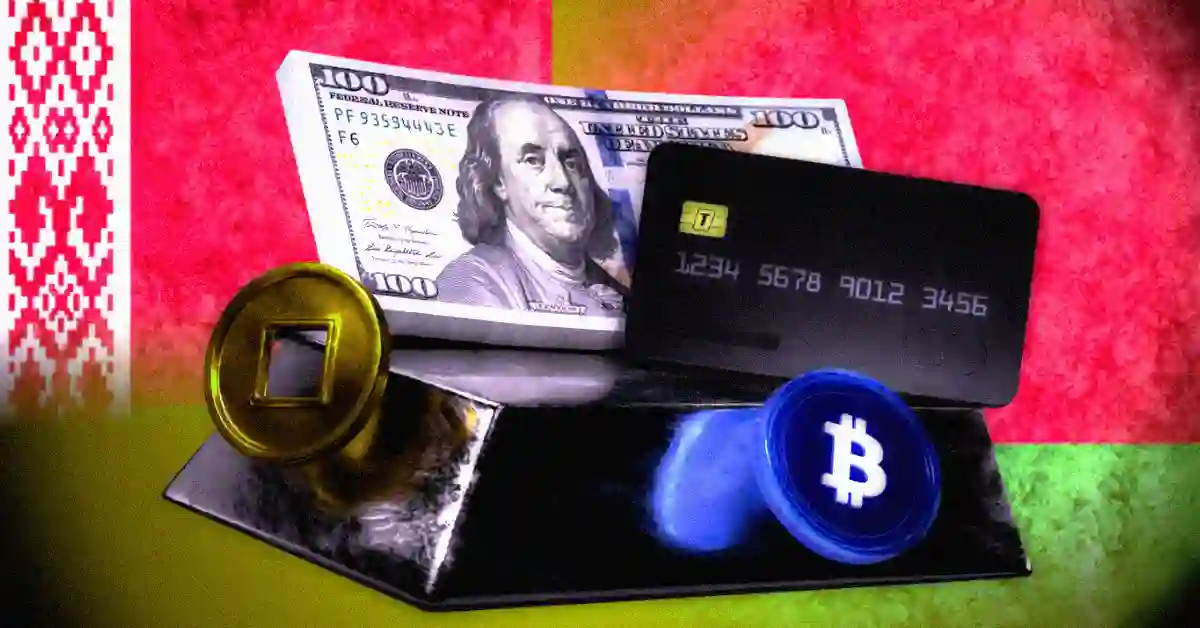
Belarus has formally legalized crypto banks, marking a notable shift in how the country approaches digital assets. President Alexander Lukashenko has signed a decree allowing financial institutions to offer cryptocurrency services alongside traditional banking products such as deposits, transfers, and loans. On the surface, the move signals Belarus’ intent to blend on-chain finance with familiar banking infrastructure and modernize its financial system.
Under the new rules, only companies registered as residents of Belarus’ High-Tech Park (HTP) can operate as crypto banks. These firms must also be listed in a special registry maintained by the National Bank of the Republic of Belarus. Crypto banks will not be treated as full commercial banks but will operate as non-bank financial institutions under HTP governance, giving regulators tighter control while still enabling innovation.
For local users and businesses, the framework promises access to hybrid financial products that connect fiat and crypto more smoothly. In theory, this could reduce friction when moving between traditional payments and digital assets, offering faster settlement and more flexibility than legacy banking alone. It also provides a regulated path for crypto activity within Belarus, something that has been limited or unclear in many jurisdictions.
However, the benefits come with strict boundaries. Reports suggest crypto banks must maintain full fiat backing and operate within clearly defined rules, limiting risk but also reducing the freedom often associated with crypto markets.
Belarus’ decision aligns with a broader global shift as finance steadily moves on-chain. Industry data shows that more than half of major banks are already investing in digital assets, while roughly a quarter are exploring or offering crypto custody and trading. Tokenization is also gaining momentum, with a growing share of bonds and real-world assets expected to be issued and managed on blockchain rails.
At the same time, DeFi is evolving toward more sustainable models, focusing on profitability rather than inflationary incentives. Stablecoins, tokenized cash, and even AI-driven financial agents are increasingly shaping how capital flows across digital markets.
Despite the headlines, some analysts urge caution. Crypto analyst Brain argues that Belarus’ move is less about embracing Bitcoin and more about control. By legalizing crypto banks while banning major foreign exchanges and requiring strict backing, the government is effectively channeling all crypto activity through state-approved institutions.
In his view, this is a strategy to manage capital flows and navigate sanctions, not a sign of nation-state Bitcoin adoption. With Bitcoin prices largely unmoved, the market appears to agree for now. The real test, he says, will be whether this framework attracts foreign capital or simply confines domestic liquidity within regulated walls.
Crypto banks are HTP-registered institutions offering both traditional banking and cryptocurrency services under regulated rules.
Crypto banks must maintain full fiat backing, follow strict operational rules, and operate as non-bank financial institutions.
They provide smooth fiat-to-crypto transactions, faster settlements, and regulated access to digital financial products.
No, the focus is on controlled crypto adoption through state-approved banks, not national Bitcoin usage or speculation.
CoinPedia has been delivering accurate and timely cryptocurrency and blockchain updates since 2017. All content is created by our expert panel of analysts and journalists, following strict Editorial Guidelines based on E-E-A-T (Experience, Expertise, Authoritativeness, Trustworthiness). Every article is fact-checked against reputable sources to ensure accuracy, transparency, and reliability. Our review policy guarantees unbiased evaluations when recommending exchanges, platforms, or tools. We strive to provide timely updates about everything crypto & blockchain, right from startups to industry majors.
All opinions and insights shared represent the author's own views on current market conditions. Please do your own research before making investment decisions. Neither the writer nor the publication assumes responsibility for your financial choices.
Sponsored content and affiliate links may appear on our site. Advertisements are marked clearly, and our editorial content remains entirely independent from our ad partners.
A crypto pioneer recently put two very different networks to the test: Pi Network and…
Story Highlights The live price of CAKE token is . Price predictions for 2026 range…
Story Highlights The live price of the Jasmy token is . If the descending structure…
Most people who throw out a $1,000 XRP price target do it anonymously on social…
USDC issuer Circle has seen its stock (NYSE: CRCL) tumble by 9.89% over the past…
US President Donald J. Trump is set to attend the “crypto and business conference” at…