The global payments industry has been circling blockchain for years, cautious and uncommitted. That may be changing.
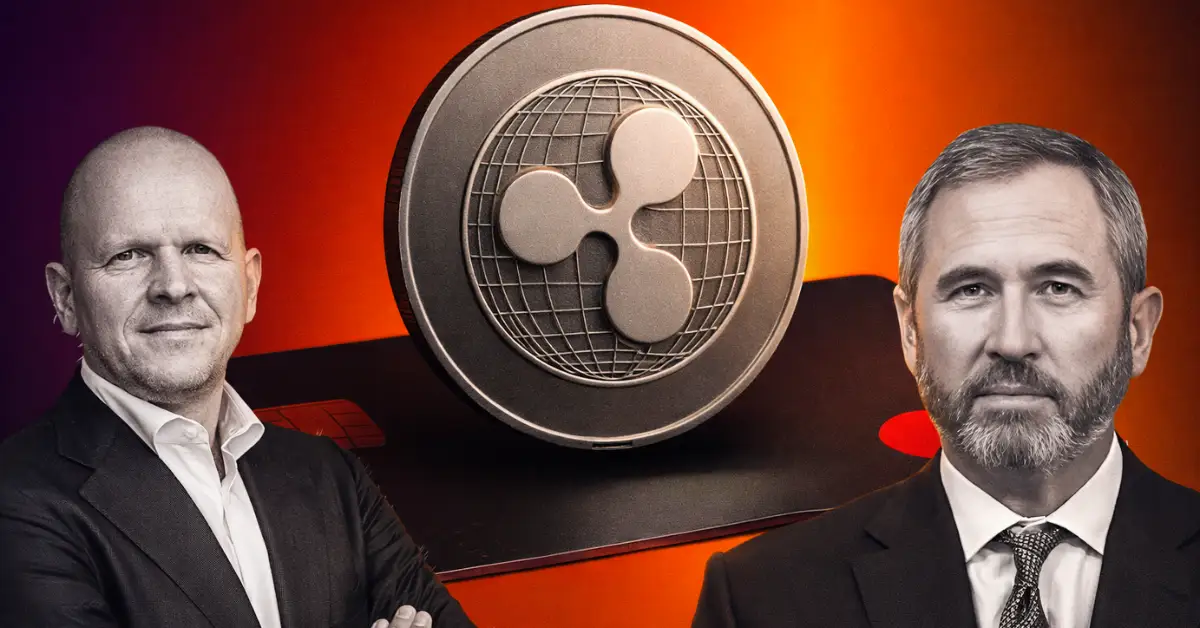
Ripple took to X this week to name what many had been quietly observing: digital assets are no longer a laboratory experiment. They are becoming operational tools. The company pointed specifically to Mastercard’s newly launched Crypto Partner Program as evidence of that shift, describing it as an important step toward connecting blockchain developers with established financial infrastructure.
Then Mastercard replied. The payments giant, which processes transactions across more than 200 countries and handles trillions of dollars annually, did not respond with a press release. It responded with six words: “Fueling the future of the digital payment world.”
Short as it was, the response landed with unusual weight. In a sector where partnerships are announced with carefully worded statements and coordinated communications, a direct, unqualified public reply from one of the world’s most powerful payment networks is its own kind of signal.
Market analyst Jacob Metzger was among the first to highlight the exchange, pointing out that this was not a startup responding to another startup. This was a company responsible for a meaningful share of how money moves globally, stepping into a public dialogue about digital assets and choosing to validate it.
Other voices quickly joined. Finance analyst Renaat Ver Eecke noted that corporate treasury teams are actively exploring whether stablecoins and blockchain-based settlement can reduce the friction embedded in how business payments currently work.
Analyst Logan Winn framed the two companies as complementary rather than competing: Mastercard owns one of the most extensive global acceptance networks ever built, while Ripple has spent years developing infrastructure for rapid, low-cost cross-border settlement.
No formal partnership has been announced, and neither company has indicated one is coming. But the exchange reflects something real: the era of traditional finance treating blockchain as a curiosity to study from a distance appears to be giving way to something more pragmatic.
The question is no longer whether digital assets have a role in global payments. It is about what that role looks like and who shapes it.
The future of payments will not be built by one company or one technology. It will be assembled from many pieces. The assembly, it seems, has begun.
No. Mastercard and Ripple have not announced a partnership. However, their public exchange highlights growing collaboration between traditional finance and blockchain payment infrastructure.
Ripple’s blockchain infrastructure enables faster and cheaper cross-border payments by reducing intermediaries, allowing financial institutions to settle transactions more efficiently.
Yes. Blockchain can streamline international transfers, cut costs, and enable near-instant settlement, making digital assets a growing part of the evolving payment ecosystem.
The ALGO price just pulled off a flashy 30% intraday move but zoom out for…
Story Highlights The live price of the UniSwap crypto token is . Price predictions for…
SBI Holdings’ institutional liquidity arm B2C2 has designated Solana as its primary network for routing…
Story Highlights Binance Coin Price Today is . Expanding exchange-ecosystem demand could lift BNB price…
Franklin Templeton, managing $1.7 trillion in assets, is acquiring a crypto-focused spinoff from CoinFund to expand…
Hong Kong’s plan to roll out its first batch of stablecoin licences by the end…
